
Breaking the Silence
By Kiley Sutter
Mental Health, Suicide, and Seeking Help in Agriculture
For many farmers, stress is just considered part of the job. Markets fluctuate. Weather changes without warning. Equipment breaks down at the worst possible time. Input costs rise while profits remain uncertain.
Most farmers learn early on that resilience is essential to surviving in agriculture.
But what happens when stress becomes more than just stress? What happens when anxiety, depression, isolation, or hopelessness begin to take hold?
For Alberta farmer Blake Fraser, the answer wasn't simple. His journey through depression, self-harm, alcohol abuse, and suicidal thoughts nearly cost him his life.
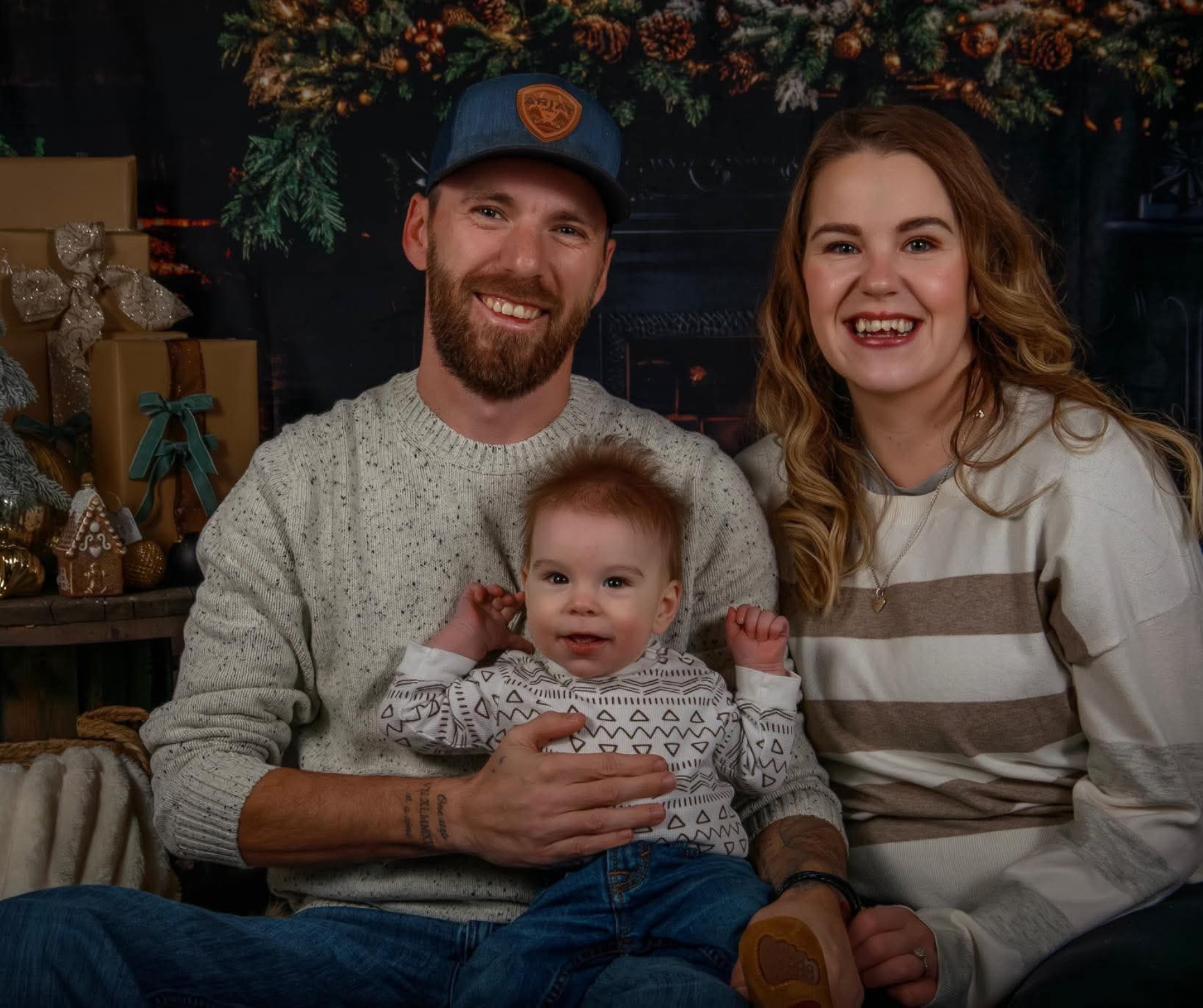
Today, Blake shares his story openly in hopes that other farmers will recognize they are not alone, and that asking for help may be the strongest thing they ever do.
Pressure To Be Strong
Blake grew up in Edgerton, a farming and oil community where hard work, independence, and toughness were valued. Values that research shows in almost every farming community. As a fourth-generation farmer, he learned early that problems were something you handled yourself.
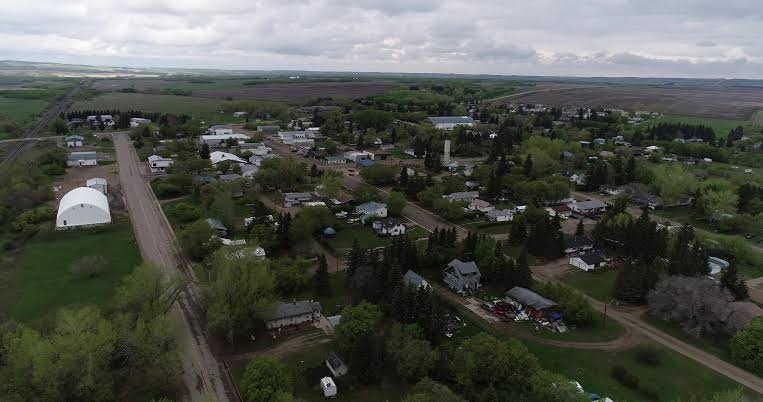
Aerial view of the village of Edgerton.
“As a young male in a farming community,” Blake explains, “that whole 'suck it up, don't be a sissy' thing gets ingrained at a very young age.”
As a kid, Blake never talked about how he was feeling. He says, “I believe the stigma myself. I always felt that I was weak or being a coward.”
While Blake may have felt alone while enduring these thoughts, research suggests that his experience is far from unique.
In a widespread study of Canadian farmers, researchers found significantly elevated levels of stress, anxiety, depression, emotional exhaustion, and burnout among producers compared to the general population (Thompson et al. 2022). Their findings showed that mental health worsened with the pandemic.
Another study found that many Canadian farmers report feeling pressure to appear strong and self-reliant, even when experiencing significant mental health challenges (Hagen et al. 2021). Farmers in this study from repeatedly described a common culture where farmers are expected to be tough and able to handle problems on their own.
When Stress Becomes Something More
When Blake’s mental health struggles began, he didn’t understand what was happening.
He began self-harming but he couldn't explain why, he simply knew something felt wrong.
Instead of telling anyone, he hid it. As he got older, the emotional pain evolved into anger, self-hatred, and eventually heavy alcohol use.
He began experiencing intense anxiety, nightmares, and feelings he couldn't make sense of.
When a doctor eventually diagnosed him with depression, Blake remembers feeling devastated.
“It felt like I got hit in the stomach with a sledgehammer.”
The diagnosis didn’t bring relief or hope that he could get better. Instead, it brought shame, and years of stigma surfaced. Blake recalls his thoughts at that moment.
“I felt weak, pathetic, [and] less than a man. I thought, men don’t feel like this. You’re weak. You’re nothing.”
These were the thoughts that ran through his mind over and over again while he struggled in silence.
Depression often looks different than people expect. While sadness is a common symptom, depression can also involve irritability, anger, exhaustion, sleep problems, hopelessness, difficulty concentrating, and withdrawal from others.
The Crisis Point
For years, Blake tried to manage his struggles alone.
He self harmed, drank alcohol, and bottled up what he was feeling, until eventually, the weight became unbearable. After years of deteriorating mental health, Blake found himself repeatedly considering suicide.
What stands out most in Blake's story is something mental health professionals often emphasize: He didn’t truly want to die. “I never wanted to die,” he says.
“I just wanted to shut my own brain off once and for all.” For Blake, the stress had been piling up for so long, he simply didn’t think he could take it anymore.

One of the most important moments in Blake's story occurred during that crisis.
He picked up the phone, called somebody, and talked.
That conversation created enough space between the thought and the action for others to step in and help. He was taken to the hospital and eventually admitted for treatment.
When discussing suicide prevention, researchers often talk about connectedness and social support, the feeling that someone cares, someone is listening, and someone is willing to help.
Connectedness is considered one of the strongest protective factors against suicide. In fact, a study showed that even among farmers experiencing depression, those who felt supported and connected to their communities were far less likely to experience suicidal thoughts (McLaren & Challis, 2006).
Blake's story demonstrates exactly why social connectedness matters. One conversation changed the outcome, and changed his life.
Recovery Began when He Stopped Pretending

Blake had been hospitalized before, but this time, his mindset was different.
Rather than expecting treatment to magically fix everything, he committed himself to the process.
He attended classes, participated in therapy, and learned coping skills. He worked hard to get better.
Just like hard work on the farm, healing took time, energy, and focus.
He began journaling his thoughts and emotions, eventually filling multiple notebooks.
Recovery wasn't about becoming immune to stress.
It’s about learning how to respond differently when stress showed up.
One lesson from treatment stayed with him. “They'll give you the tools, the blueprints, and teach you how to build the house. But if the roof leaks later, you have to know how to fix it.”
What Farmers Can Learn From Blake's Story
Mental health challenges rarely appear overnight.
Often, they develop gradually through warning signs that can be easy to dismiss.
Based on Blake's experience, some signs may include:
Increased irritability
Feeling constantly overwhelmed
Withdrawing from family or friends
Increased alcohol or substance use
Difficulty sleeping
Persistent feelings of hopelessness
Loss of enjoyment in everyday activities
Thoughts of self-harm or suicide
If these signs sound familiar, it may be time to reach out for support. As Blake explains, the hardest part is often simply being honest.
When asked what message he hopes other farmers take away from his story, Blake's answer is simple: “Talk to somebody before you're just another statistic. I feel I am a much, much stronger person now because of my willingness to talk.”
If you or someone you know needs support, the National Farmer Crisis Line is available 24/7 at 1-866-FARMS01 (1-866-327-6701), offering free, confidential support for farmers, farm families, and agricultural workers.