
Making Support Fit Agriculture
By Rebecca Purc-Stephenson
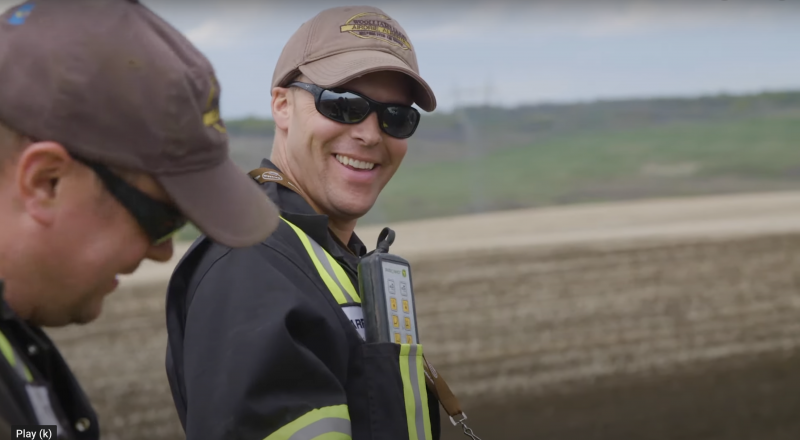
The Hidden Pressures … Build
Farming carries pressure that builds quietly over time. Weather that doesn't cooperate. Margins that get tighter every season. Costs that keep rising. Years that don't go as planned.
There is a version of farming that most people see: open fields, working with animals, independence, and a life built on hard work and purpose. But reality reveals a more complicated truth.
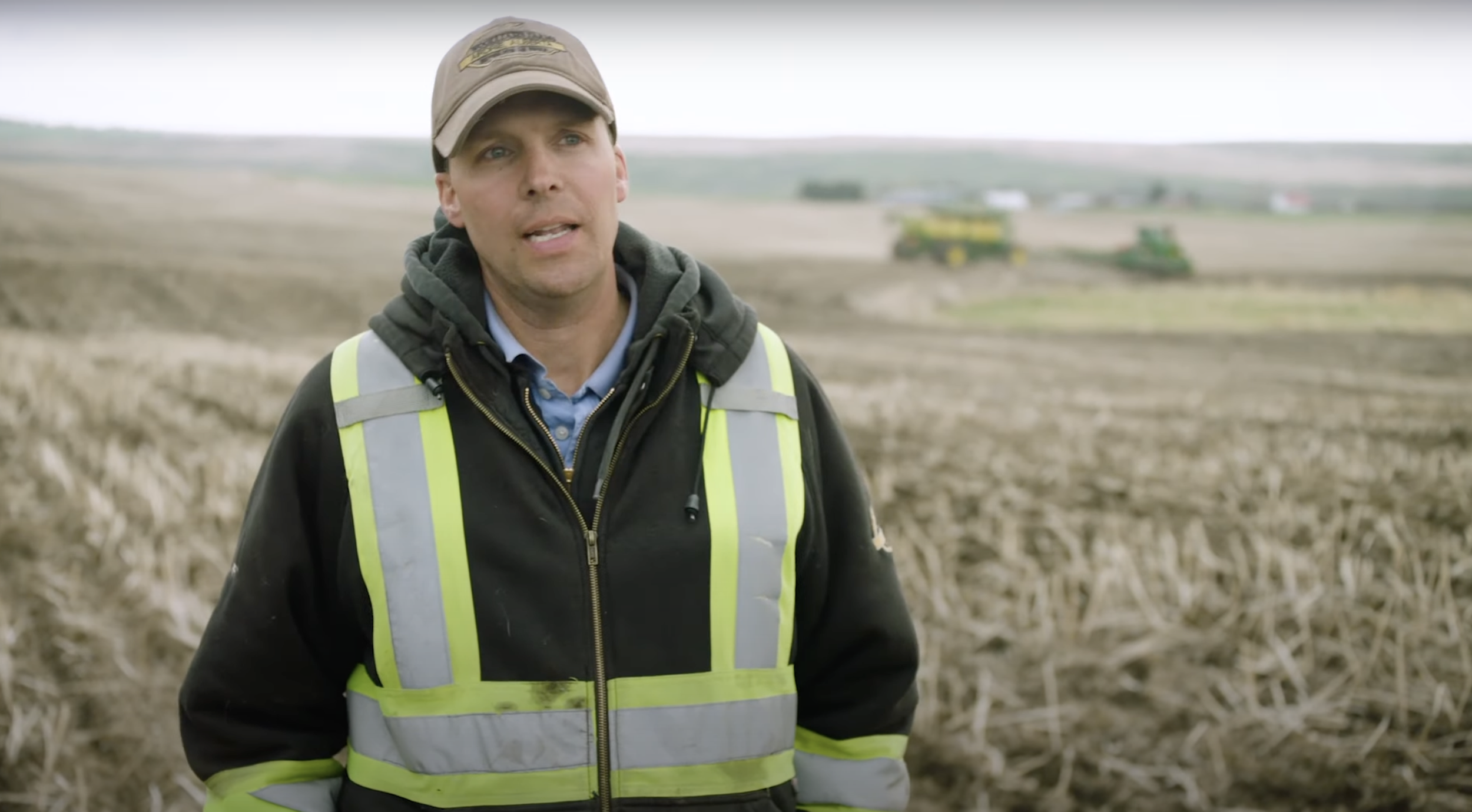
For Larry Woolliams of Rocky View County, Alberta, those pressures became personal. "Whether it's social media, margins are way thinner, or the input costs and the weather, there's just a whole lot to it," he explains. "It affects us all."
Larry is a fifth-generation farmer with Woolliams Farms Ltd. in Rocky View County. His family homesteaded in the Calgary area in 1890, establishing one of the region's first dairy farms before transitioning to today's progressive grain operation.
As the owner and operator, Larry spent decades building a business, raising a family, and contributing to his community. By all outward appearances, things were going well.
But over time, the stress accumulated.
"When you're in these struggles, it can get dark. It can feel alone," he says.
Like many farmers, Larry didn't ask for help. "I was blocked," he recalls. "I'm like, 'Yeah, well, whatever. I don't really care what you think.'"
It took someone close to him to recognize something wasn't right. "You need to go talk to somebody," his friend told him. "Because if you don't, I'll book you in somewhere."
Eventually, Larry agreed. He began searching for a therapist, but one thing mattered to him. "I wanted to stay away from my own home," he says. That's when he found a therapist who also understood agriculture.
Finding the Right Fit
Working with someone who understood farming changed everything.
"When I first talked to my therapist... my guard was up," Larry remembers. "But she gave me the space to talk. It was so caring, so neutral. She didn't judge you. She gets it. And to me, that's huge."
It wasn't only the conversations that mattered. "I could actually smell the smells... We were on a farm. I was in my own environment."
Feeling understood -- without first having to explain farming -- allowed Larry to focus on himself rather than translating his way of life.
At the same time, he began building other supports into his life. He worked with an executive coach, committed to regular exercise, and leaned on trusted people around him. "I've worked very hard on myself for the last two years to bring myself back around," he says.
Then life changed again.
Just as things were beginning to stabilize, Larry experienced a sudden personal loss. "I literally had my whole world implode." He was preparing for another farming season after several difficult years while managing the operation and trying to make sense of what had happened. "My stress meter went from pinned to absolutely maxed."
This time, however, something was different. He wasn't starting from zero. He already had support. He knew who to call. He knew where to go.
"If this was two or three years ago, this would be bad," he says. "But it's good." That realization stayed with him. "That's priceless," Larry says. "Because when you're struggling, you want to go talk now."
Turning Experience into Action
Larry's experience reinforced something many farmers have told us through AgWell's research.Access matters. Timing matters. And finding someone who understands agriculture matters.
"It takes a lot to have the courage to reach out," Larry says. "And if you can make that part easy for people, that's a big thing."
That insight helped shape the AgWell Farmer Wellness Network, a pilot program now available in Rocky View County.Through the program, farmers, farm family members, and those working in agriculture can access up to five free counselling sessions with one of nine certified, farm-informed therapists across Alberta. Appointments are available in person, by telephone, or virtually, and no referral is required.
The process is intentionally simple: visit the AgWell website, browse therapist profiles, choose the therapist who feels like the best fit, and reach out directly.
The program is made possible through the generosity of the Annual Woolliams Farms Ltd. Charity Golf Classic and the Rural Heart Foundation, in partnership with the University of Alberta, the Canadian Centre for Agricultural Wellbeing,and Rocky View County.
For Dr. Rebecca Purc-Stephenson, founder of AgWell Alberta and a University of Alberta professor, the program reflects years of listening to farmers.
"Our role isn't to tell communities what they need. It's to listen first, build alongside them, and create support that reflects the realities of agriculture. When farmers help shape the solution, the support is far more likely to be trusted and used."

Looking Ahead
For Larry, this work has never been about creating a single program. It's about creating something that lasts.
"I want to do a good thing for our community," he says. "I want this to live for years."
He hopes that future generations of farmers won't have to search as hard for support when life becomes overwhelming.
Changing that begins with changing how we think about mental health.
"It's funny how closed-minded people are when it comes to talking to professionals like this," Larry says. "They all think, 'Oh, there's something wrong with me. I'm broken.'"
But that's not how he sees it.
"You can't fix it," he says. "You've got to learn how to deal with it."
That shift in thinking is at the heart of the Farmer Wellness Network. It's not about waiting until someone reaches a crisis. It's about making support easier to access, more relevant to agriculture, and available when farmers are ready.
Because, as Larry reminds us: "I don't care who you are, what you are... it affects us all."
If you or someone you know needs support, the National Farmer Crisis Line is available 24/7 at 1-866-FARMS01 (1-866-327-6701), offering free, confidential support for farmers, farm families, and agricultural workers.